

2026
Finalist
People's Choice Award
Catalyst Omaha
Design
Alley Poyner Macchietto Architecture + ANNA Design Studio

Corey Gaffer


No items found.
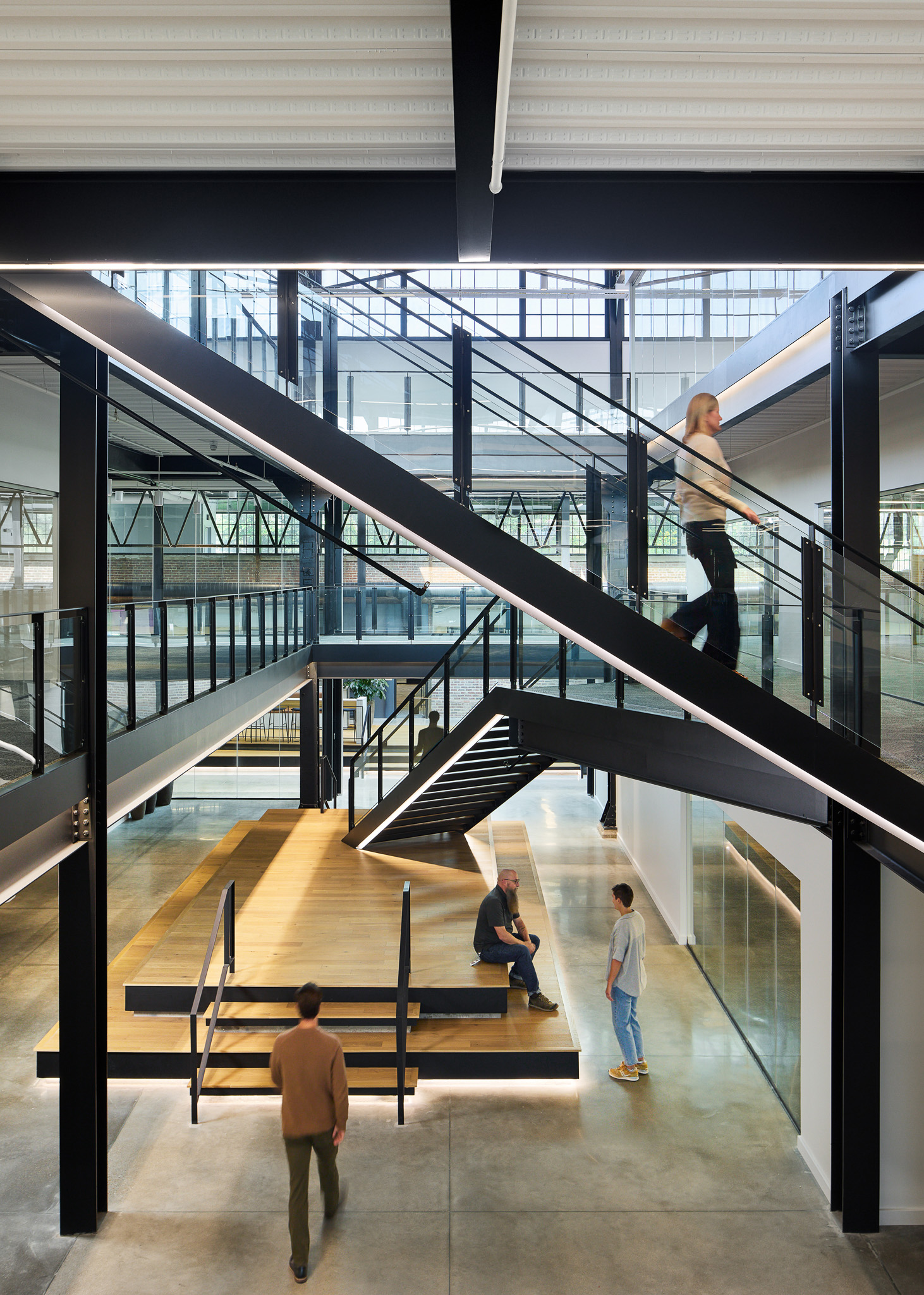
Catalyst Omaha demonstrates the transformative power of adaptive reuse. Positioned between a historic neighborhood and the growing University of Nebraska Medical Center, this former steel mill had been vacant for many years and the site held underutilized potential. The client sought guidance from the design team to not only adapt the site’s two utilitarian structures, but to celebrate them. This respect for the building’s past informed a design strategy that guided the project’s interior vision. Catalyst is a flexible 170,000-square-foot innovation hub that includes more than 100,000 square feet of office and coworking space supporting medical and cross-sector organizations of all sizes. A variety of office typologies allows tenants to scale as their needs evolve, remaining in place as their operations expand. Collaboration is encouraged through shared lounges, cafes, meeting rooms, open work areas, and event spaces, strategically distributed to inspire spontaneous interaction, innovation, and interdisciplinary exchange. The interior design team relied upon extensive experience with complex renovations requiring creativity and technical precision. Infrastructure analysis began with 3D laser scanning to reveal hidden conditions that could be studied as part of the new design narrative. A live Building-Information Model (BIM) enabled real-time collaboration across team disciplines, supporting efficient responses to spatial programming and overall vision alignment. Original industrial elements were not only preserved but celebrated. A story of raw beauty emerges as the previously exterior brick façade is welcomed into newly defined interior environments, oversized barn style hangar doors are honored within refined coworking spaces, the original steel factory crane remains visible overhead, and historic leaded glass windows add rich layers of texture. What was once an alleyway between the two abandoned structures was enclosed and transformed into “The Passage,” a light filled connector linking the buildings. This creative approach required close collaboration with engineering teams to ensure safe and efficient occupant egress, proper fire and smoke separations, systems integration, and structural stability as one of the originally single story structures was adapted to accommodate three occupiable floor levels. The interior design team’s thoughtful specification of modern materials complements the reimagined industrial character with a refined contemporary layer. Quartz, hot rolled steel, glazing, wood casework, polished concrete, porcelain tile, cork wallcovering, and acoustic treatments support comfort, durability, and performance. The interior design team worked closely with the Owner’s independent design lead who provided furniture, art, and brand integration to ensure Catalyst’s design story was woven throughout every space. LEED and WELL principles were incorporated throughout the project to support occupant health and comfort with clean air, accessible water, lighting control, active movement, thermal stability, and noise reduction. Restorative spaces, access to nature, and community amenities, including interior bike storage and a fitness center with changing rooms, lockers, and showers, reinforce wellness, sustainability, and inclusive access. Catalyst stands as a hugely successful model of adaptive reuse, where history and progress converge. By activating this abandoned site, celebrating its past, and reimagining its potential, Catalyst establishes a foundation for continued development, encouraging long term investment and revitalization throughout the surrounding district.


