Four Days in London: A Designer’s Story
DDF : London Design Festival Day 1: Skyline Perspectives

London Design Festival
Day 1 – Skyline Perspectives
A Festival Begins in the Sky
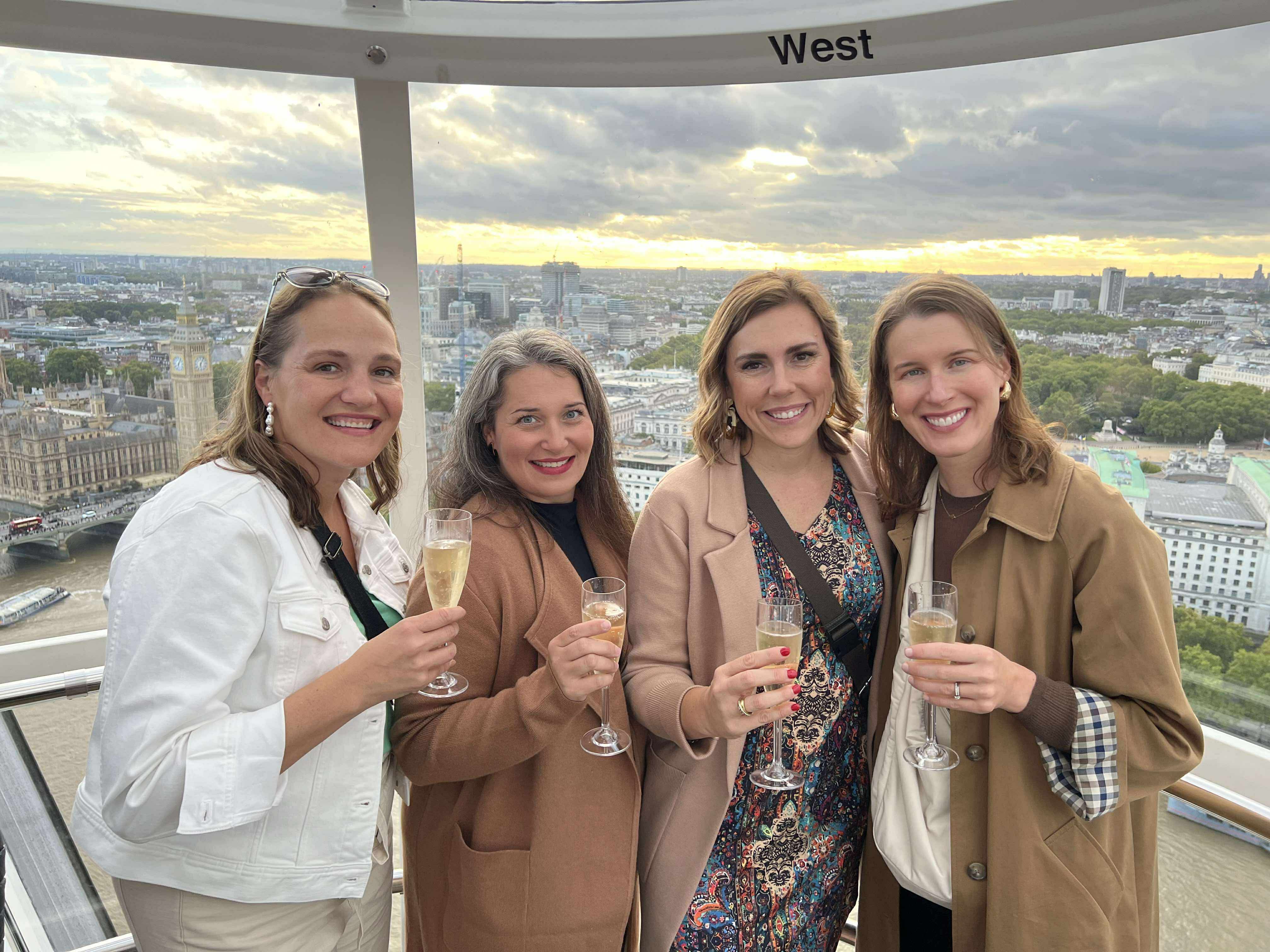
There’s nothing quite like beginning your visit to the London Design Festival dangling almost 450 feet above the Thames River, a flute of champagne in hand, pretending you’re thinking deep architectural thoughts when really, you’re just wondering how the London Eye manages to look so elegant while slowly rotating at walking pace.
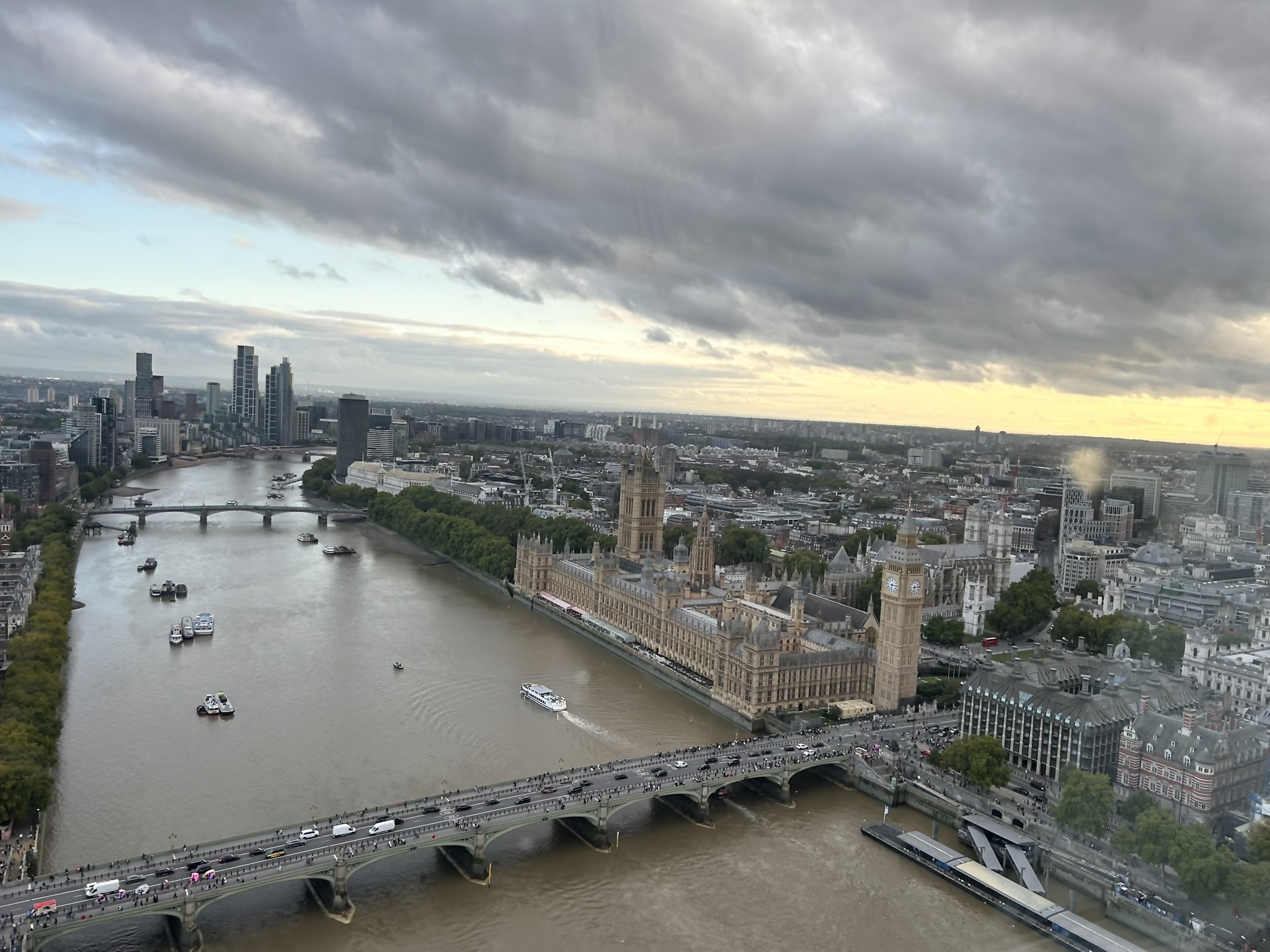
The London Design Festival is as much about the city as it is about design. It turns London itself into an exhibition hall, with streets, squares, and institutions serving as a backdrop for installations and experiences. Beginning our journey with champagne aboard the London Eye was not simply an indulgence — it was a way of orienting ourselves. Rising into the sky allowed us to see the vast stage on which design in London has unfolded: layers of history, innovation, and reinvention stretching as far as the horizon.
The London Eye Origins
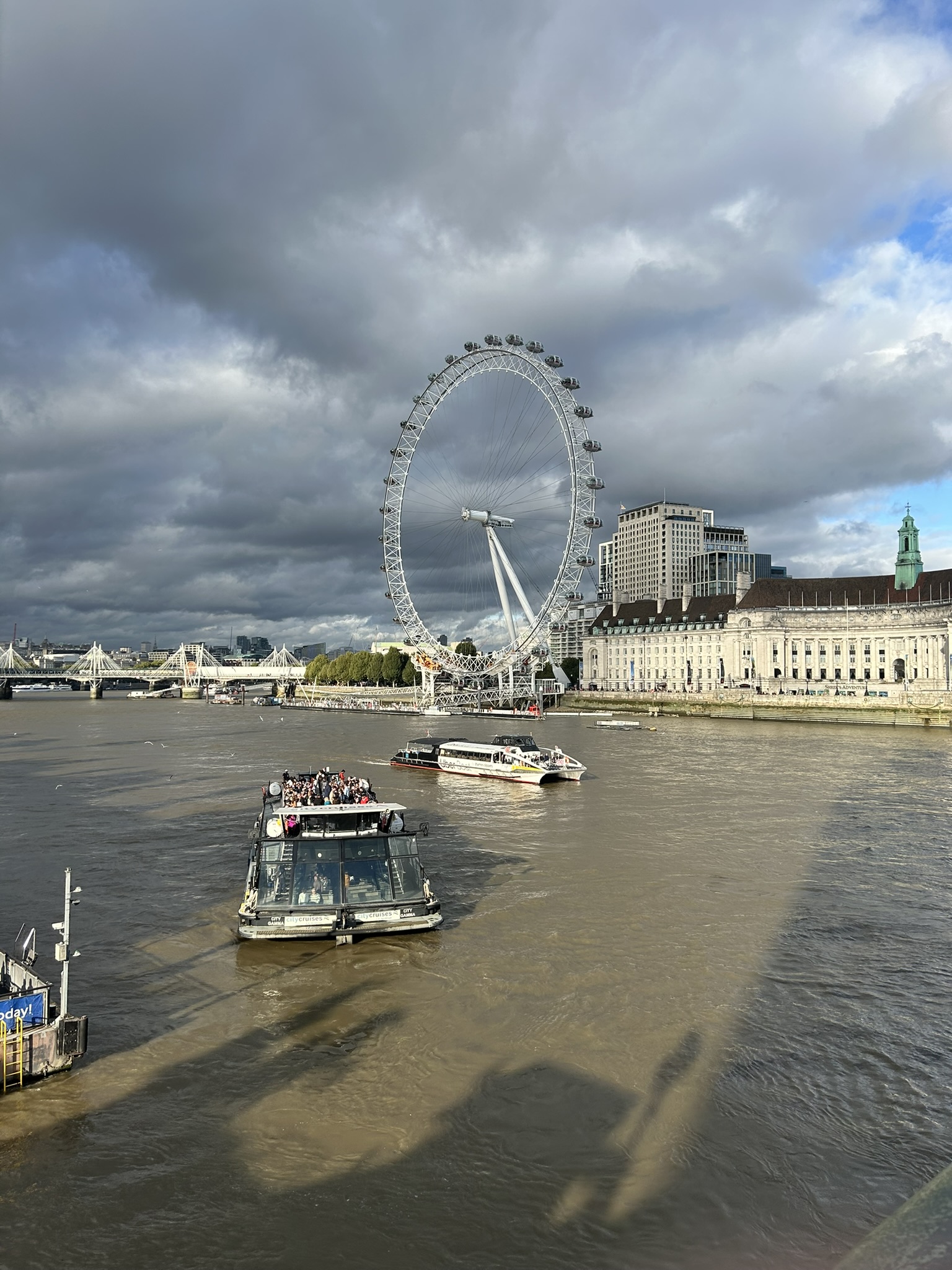
The story of the London Eye begins not with government planners, but with two architects, husband-and-wife duo David Marks and Julia Barfield. In the early 1990s, London was preparing for the millennium. While Paris had the Eiffel Tower, and New York had the Statue of Liberty, London lacked a singular, globally recognized modern icon. Marks and Barfield conceived a giant observation wheel as both a symbol of renewal and a gift to the city.
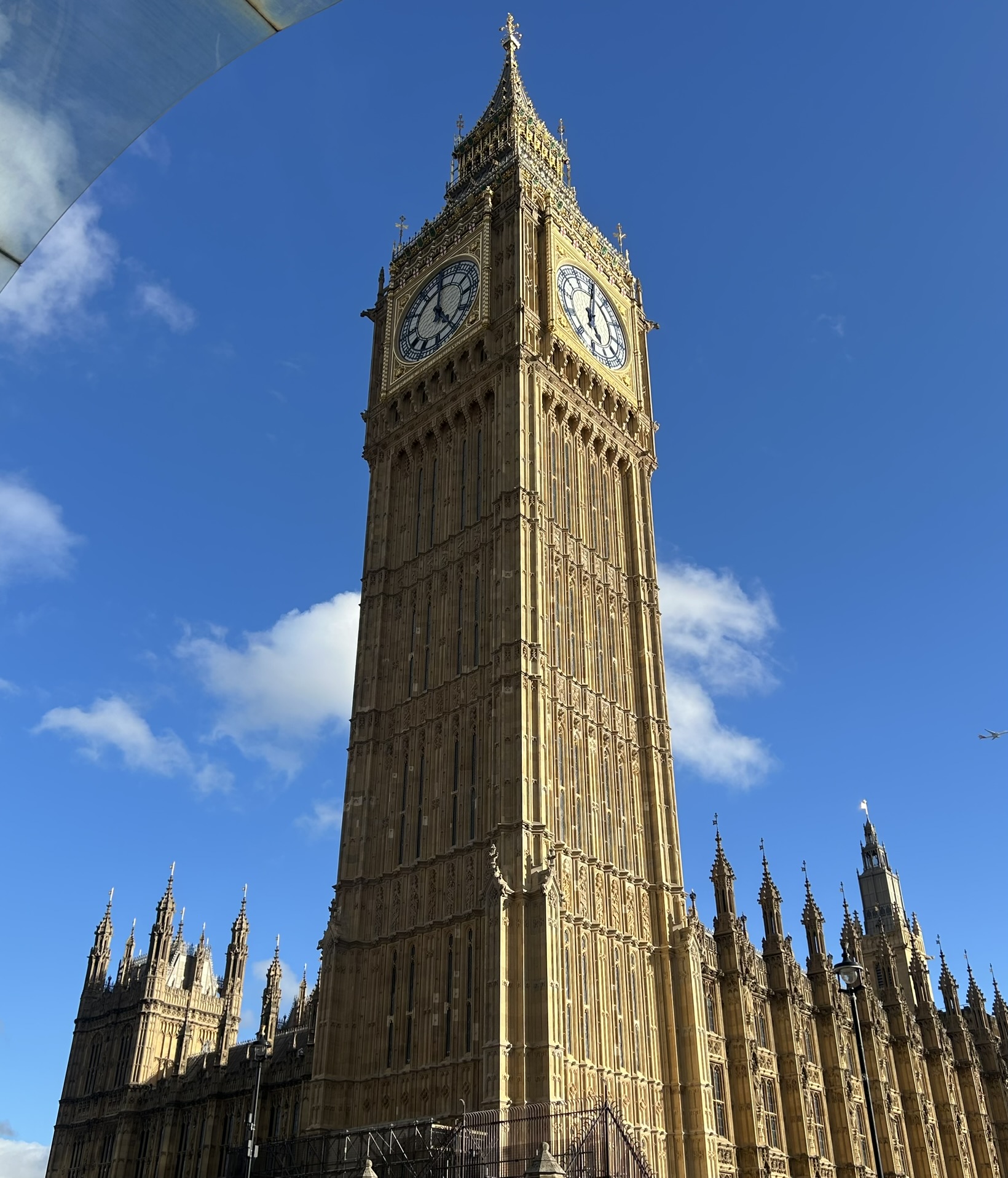
At first, their idea struggled to gain traction. It was considered too ambitious, too costly, too untested. But persistence and vision carried the project forward. Construction began in 1998, and when it finally opened to the public in March 2000, it was the world’s tallest observation wheel at 443 feet. What began as a “temporary attraction” (approved for five years) became a permanent part of London’s skyline, beloved by locals and tourists alike. This speculative project now defines London’s modern skyline as much as St. Paul’s dome or Big Ben’s clock tower.

Engineering as Architecture
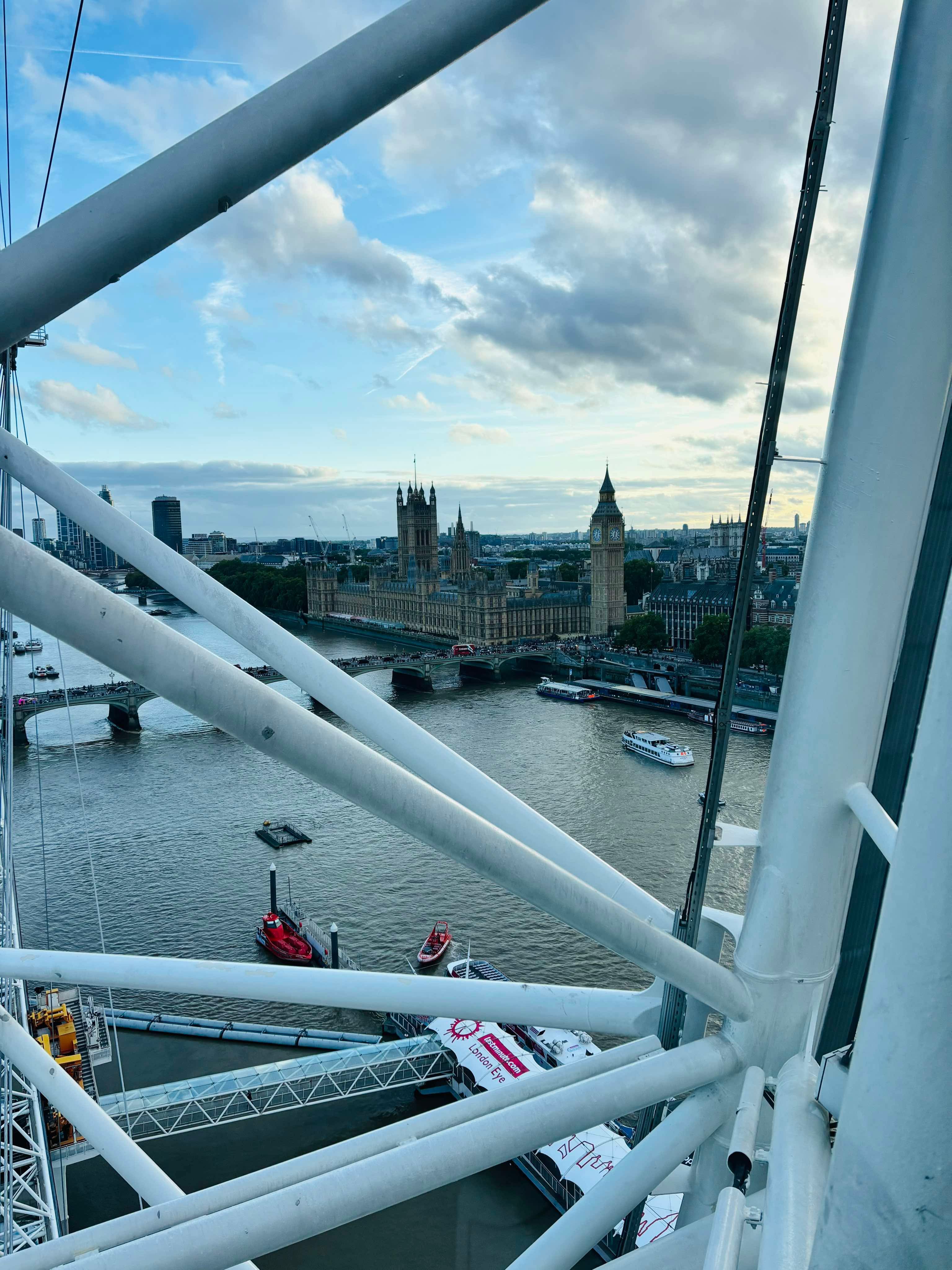
The Eye is not just a structure; it’s a feat of engineering. It was the first major cantilevered observation wheel, supported from one side rather than two, giving it its distinctive floating silhouette. Its 32 capsules, each able to hold 25 passengers, are mounted externally on the wheel’s frame, ensuring unobstructed 360-degree views.
Inside, the design is minimalist. Curved glass walls maximize visibility, while the steel framework is pushed to the edges, almost disappearing. The interior is stripped of ornament, not because of neglect, but because the city itself is the ornament. Every design decision pushes the view outward, a masterclass in restraint.
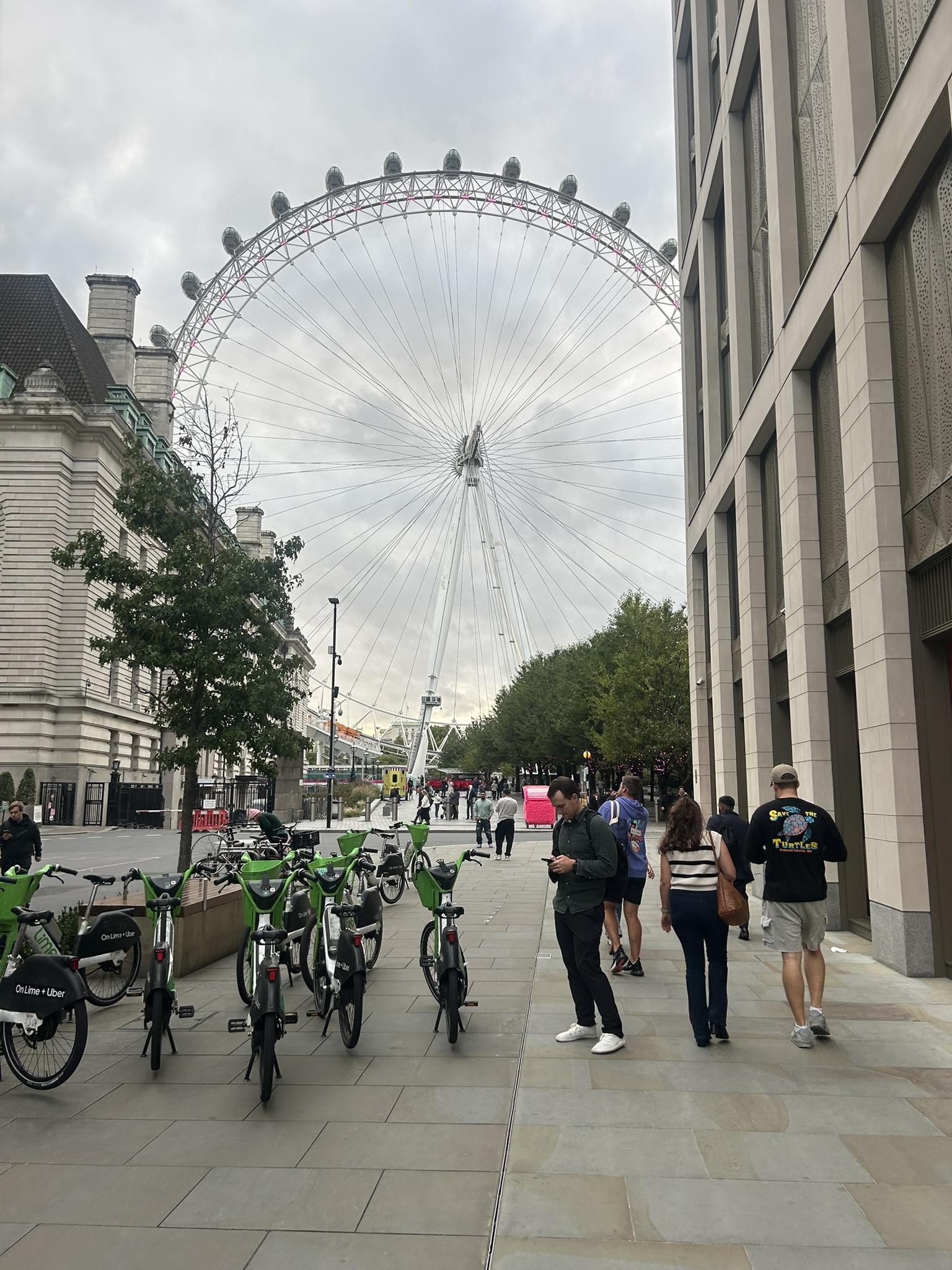
Riding the Skyline
When boarding a capsule, the pace of the wheel surprises you. Unlike a Ferris wheel, it moves continuously, so boarding feels seamless. The ascent is slow and deliberate. To the west, Westminster Abbey and the Houses of Parliament. To the east, the Shard pierces the sky. Directly below, the Thames curves through the city.
What struck me most was not only the view, but the way the space inside the capsule shaped the social experience. Unlike towers or platforms, where visitors scatter to find their own vantage points, the Eye’s circular capsule ensures a communal gaze. Families, couples, strangers all share the same sequence of revelations. In those thirty minutes, the capsule becomes a micro-community, united by design and perspective.

From Minimalism to Maximalism: Bob Bob Ricard
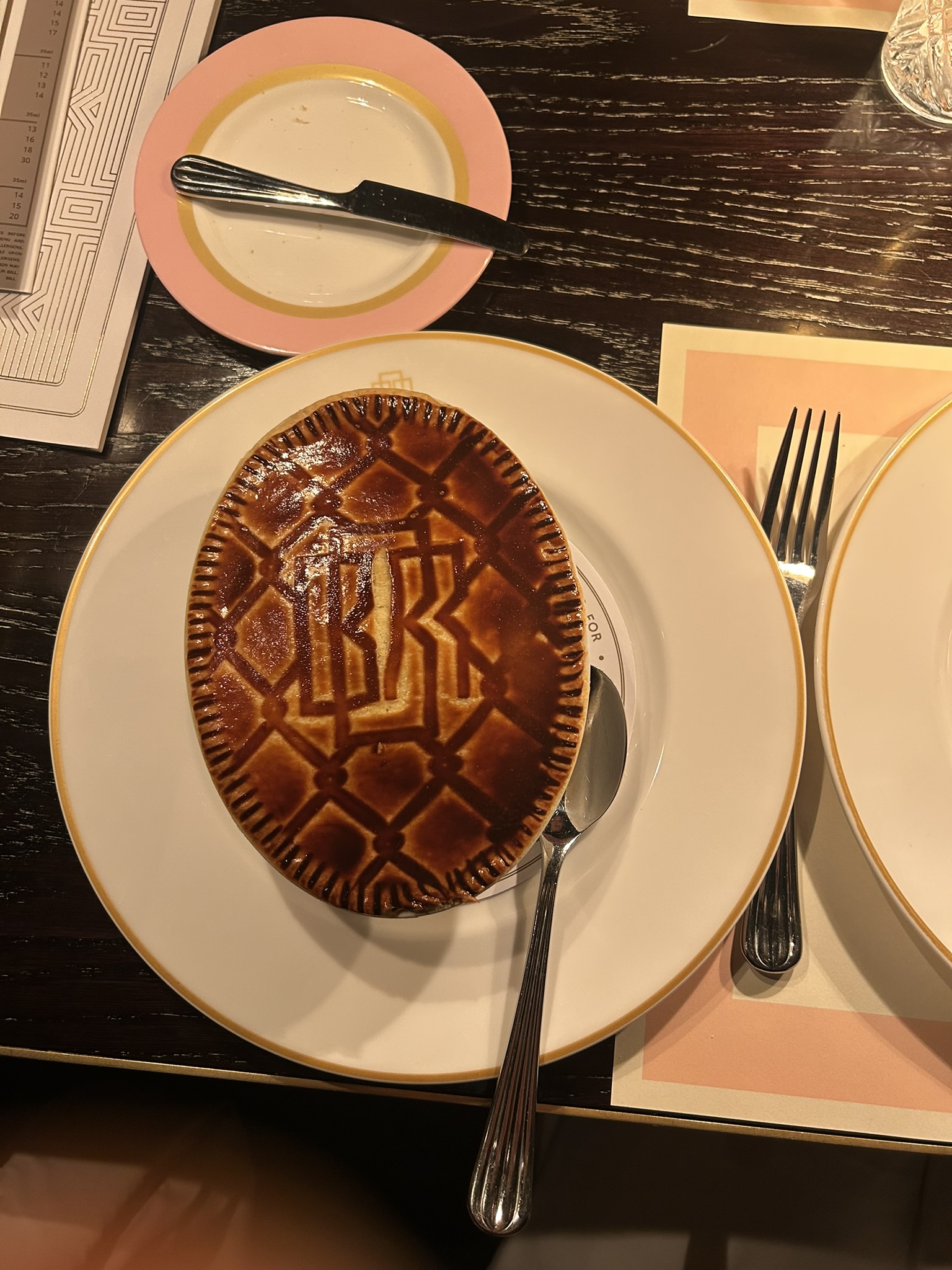
If the Eye is about structure and minimalism, Bob Bob Ricard is about style and self-awareness. It’s a delicious contradiction; a restaurant that manages to be both completely over the top and delightfully tasteful. Designed by David Collins Studio, it’s one of London’s most photographed dining rooms for good reason.
Step inside and you’re instantly transported somewhere between a 1930s train carriage and a diamond showroom. Brass rails gleam, booths are upholstered in quilted blue leather, and the lighting, oh, the lighting, is pure gold. It’s the kind of space that begs to be enjoyed slowly, ideally with a glass of champagne in hand.
And then there’s the button.
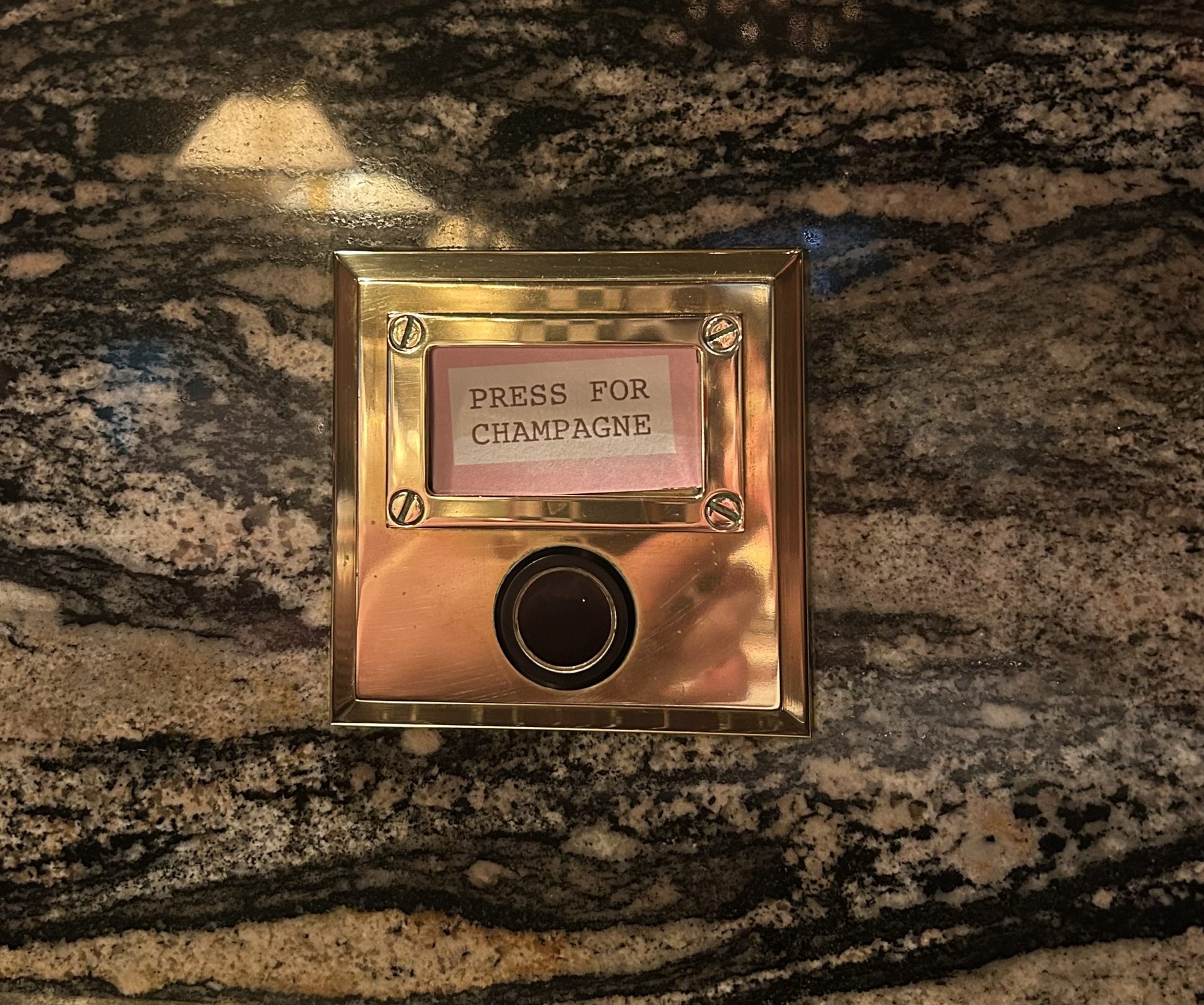
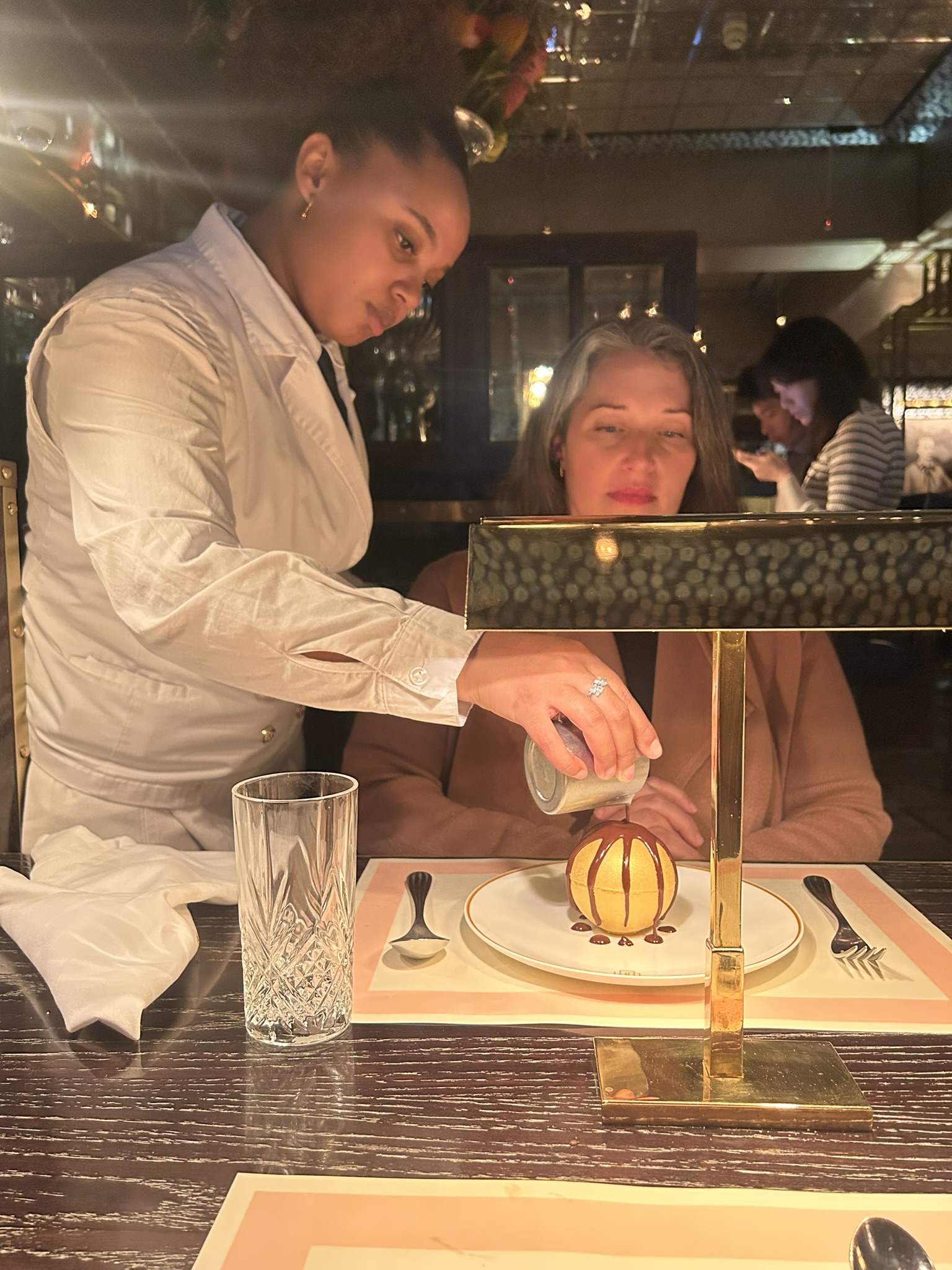
Every table comes with its own “Press for Champagne” button — a design feature that deserves its own entry in the annals of hospitality innovation. Equal parts satire and service, it encapsulates the entire ethos of Bob Bob Ricard: elegant mischief. It’s a small object that turns etiquette on its head, transforming a quiet meal into an event.
In truth, the button is a masterclass in experiential design. It’s tactile, satisfying to press, and utterly unnecessary, which makes it perfect. The moment you touch it, you’re participating in the theater of the restaurant, a blend of ritual and rebellion.
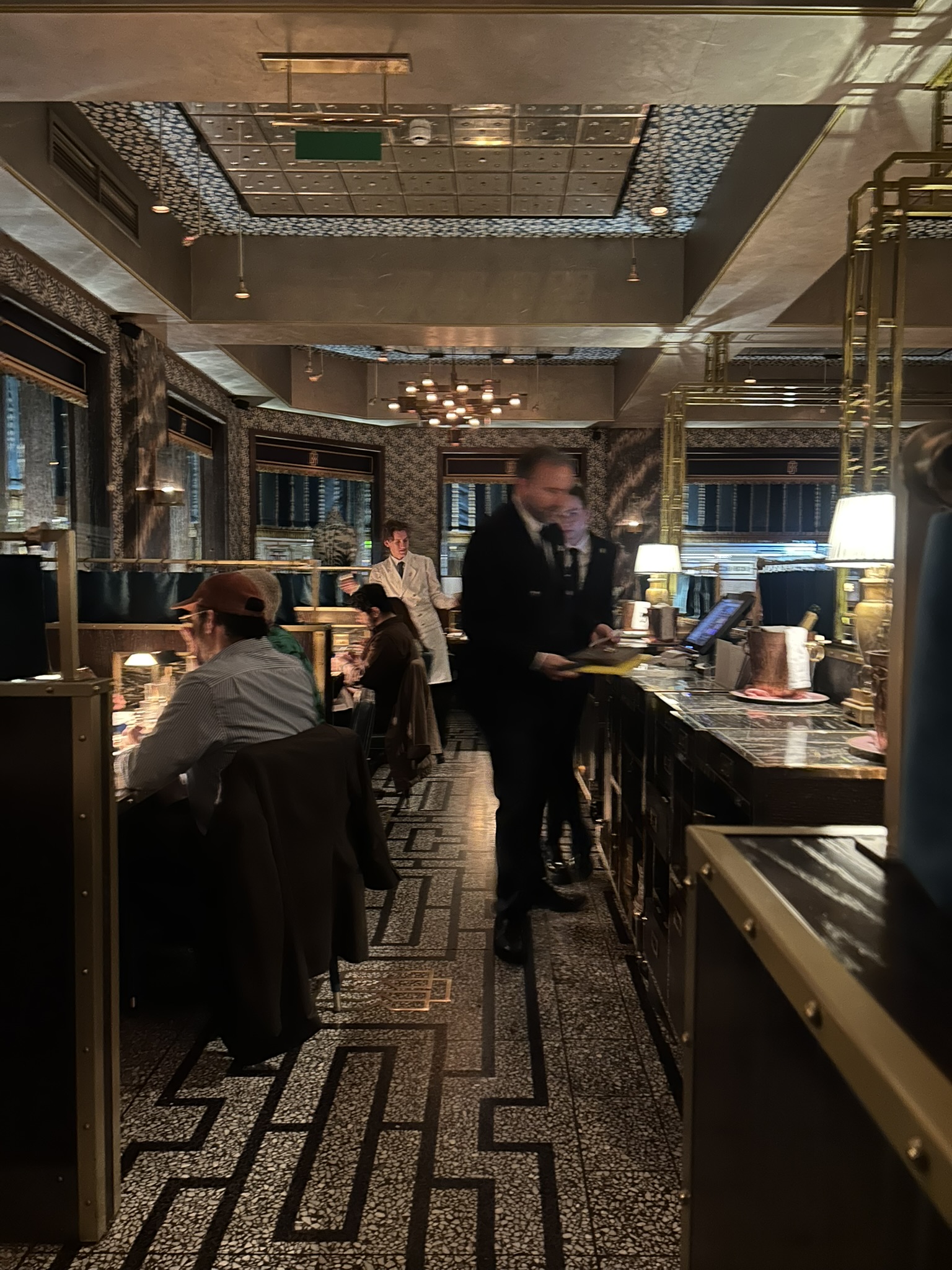
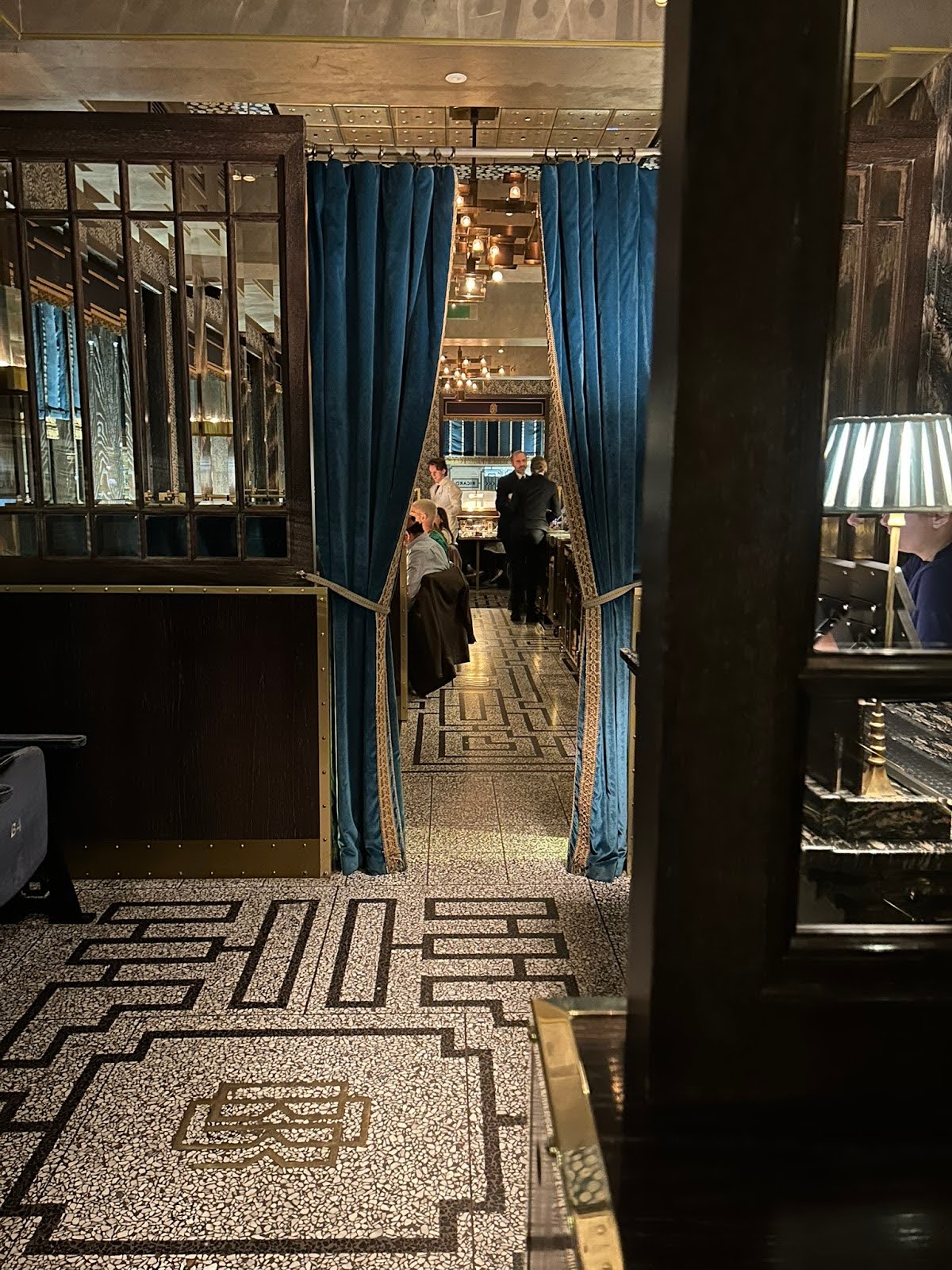
Design as Emotion: Contrasts in Practice
Looking back on the day, what resonated with me is the stark contrast between our two main experiences. The Eye was minimalist, transparent, and collective. Bob Bob Ricard was maximalist, immersive, and intimate. One framed the city as art; the other staged us as part of its own interior theatre.
Together, they highlight an essential truth: design is not a style, but a spectrum of choices that shape how we feel. Sometimes it disappears, letting the city take center stage. Other times it dazzles, reminding us that joy and indulgence are just as valid as restraint. Both are needed — and both, on this first day, set the stage for the days to come.